
What Probate Covers in Gratiot County
Probate is the court process for settling what a person leaves behind and for protecting people who cannot manage their own affairs. In Gratiot County, the Probate Court handles deceased estates, adult and minor estates, guardianships, conservatorships, assignment proceedings, claims, and civil probate actions. When someone dies with property to pass on, the estate moves through this court. When an adult or a child needs a legal decision-maker, the same court appoints one.
The Probate Court sits in the same courthouse as the county's other trial courts, at 214 E Center Street in Ithaca. It is a separate branch from the 29th Circuit Court and the 65B District Court, and it keeps its own case files. Name changes also route through probate rather than the circuit or district bench. That mix of estates, protective cases, and name petitions makes probate records some of the most personal files the county keeps.
Michigan runs probate through the Estates and Protected Individuals Code. Gratiot County follows that code, and its filings, fees, and forms trace back to state probate law.
Probate Terms Defined
Probate filings carry words that rarely come up in daily life. A short glossary helps anyone reading a Gratiot County probate record follow who does what and why. These terms show up on petitions, orders, inventories, and the accountings filed as an estate moves through the court.
- Testator
- The person who made the will. The will speaks for the testator after death.
- Executor
- The person named in a will to carry it out. Michigan often calls this role the personal representative.
- Intestate
- Dying without a valid will. State law then decides who inherits the estate.
- Guardianship
- A court appointment that makes one person responsible for a minor or an incapacitated adult.
- Conservatorship
- A court appointment that puts one person in charge of another person's money and property.
- Inventory
- The probate list of everything the estate owns, filed so the court can value the estate.
- Accounting
- The report showing money that came into and left the estate during administration.
Two more roles are worth knowing. A petitioner is the party asking the court to act, and a guardian is the person made responsible for a minor or an incapacitated adult once the judge signs the order.
Wills and Michigan Probate Law
A will is the heart of many Gratiot County probate cases. Michigan law sets clear rules for what makes a will valid, and the Probate Court applies those rules when an estate opens. If a will meets the standard, it guides how the estate is shared. If it does not, or if none exists, state intestacy law steps in.
The core rule on execution comes from the Michigan will-validity statute at MCL 700.2502, which spells out the signing and witness requirements a will must meet. The statute itself lays out how a valid Michigan will must be signed.
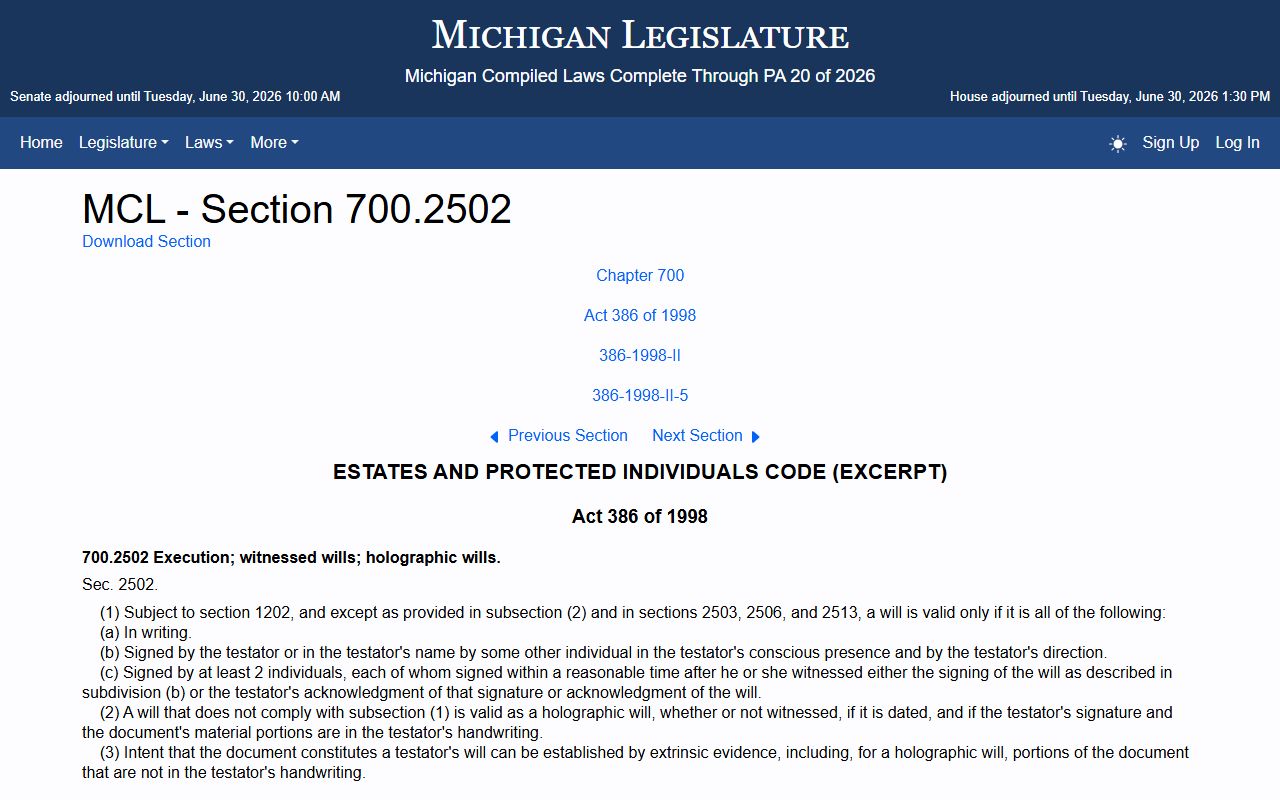
Meeting those rules matters because a valid will controls who serves as executor and who inherits. When the signing rules are not met, the estate is treated as intestate and the court applies the default shares set by law.
Michigan also lets a will be self-proved, which speeds up how the court accepts it. The self-proved will statute at MCL 700.2504 describes the sworn statement that lets a will stand without extra witness testimony. The provision shows the exact language that makes a Michigan will self-proving.
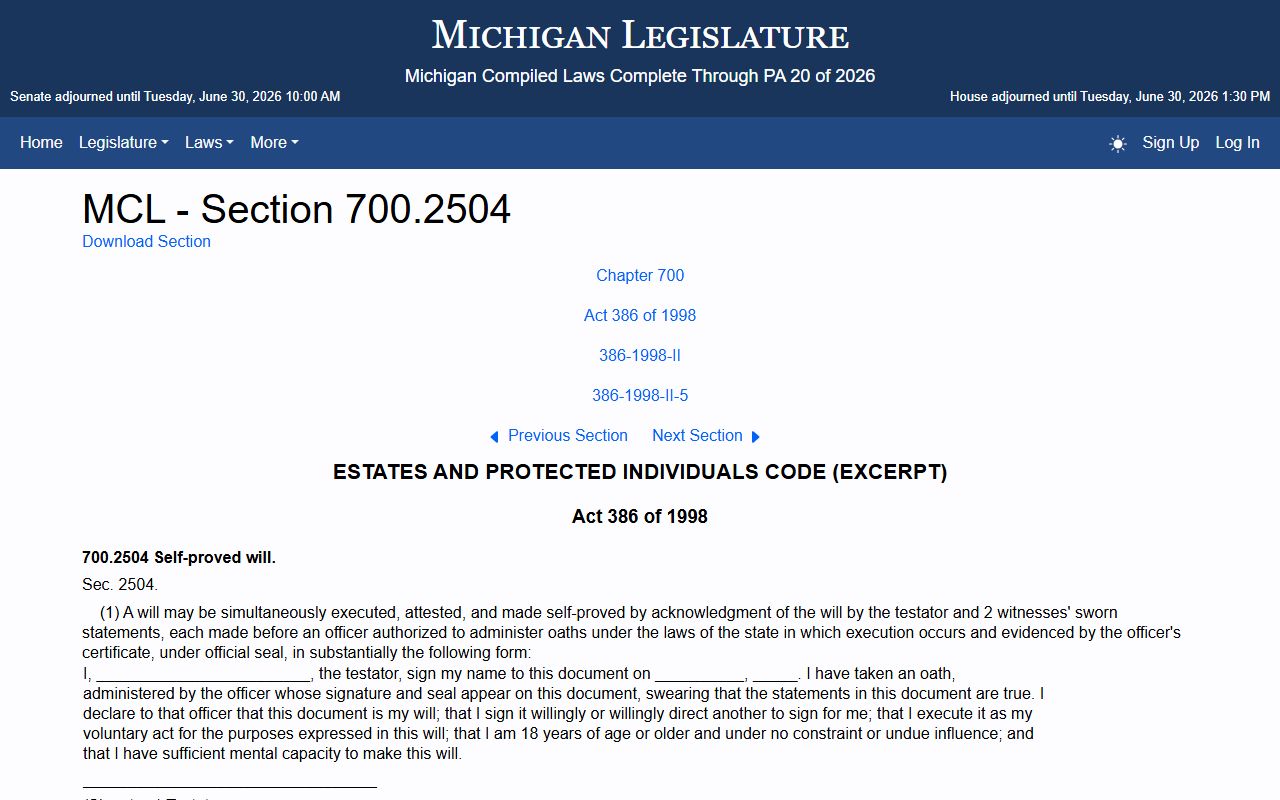
A self-proved will saves time at the Probate Court counter, because the sworn statement stands in for a live witness. That can matter when witnesses have moved, aged, or died before the estate opens.
For people who want a simple form, Michigan offers a fill-in statutory will. The statutory-will statute at MCL 700.2519 sets out the standard form and how it works. The statute prints the model form the state recognizes.
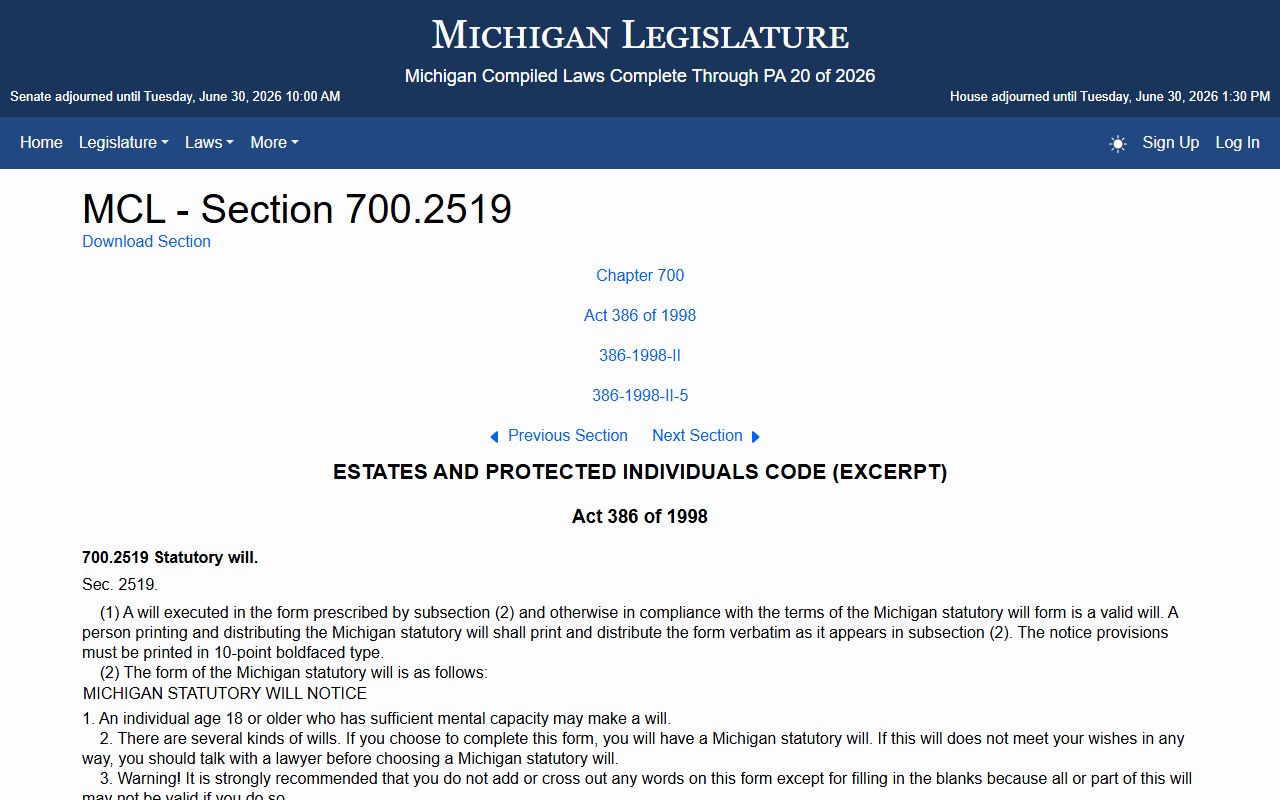
The statutory will gives residents a plain option without a lawyer drafting a custom document. Gratiot County materials do not list a special local will-deposit program, so residents follow these state rules when they plan an estate.
How to Search Gratiot County Probate Records
Gratiot County does not run a dedicated online probate search portal. The county pages reviewed do not show a public probate lookup tool, so estate and guardianship files are reached through the court office and its filings rather than a website search box. That means most probate records requests start with a call or a visit to the Probate Court counter.
The court office is the anchor for any search. Staff can confirm whether a file exists, pull the paper record, and quote the copy or certified-copy fee. Records checks in Gratiot County can also be requested by phone, fax, email, mail, or in person through the county's court-records channels. For payments tied to a probate case, the county keeps a single online hub.
- Identify the case type. Estates, guardianships, conservatorships, and name changes all live in the Gratiot County Probate Court.
- Contact the court office by phone, mail, email, fax, or an in-person counter visit to confirm the file and the copy fee.
- Request the specific document you need, such as a will, an inventory, an accounting, or a signed order, and pay the listed fee.
- Use the county Pay-For hub when a probate case calls for an online payment.
Note: Some probate filings are open to inspection while personal and medical details in the same file may be limited or redacted.
Gratiot County Probate Court Office
One court handles probate for the whole county. The Gratiot County Probate Court sits inside the main courthouse in Ithaca and is led by Judge Kristin M. Bakker. The office keeps estate, guardianship, and conservatorship files and takes filings across the counter during normal court hours.
Gratiot County Probate Court
214 E Center Street
Ithaca, MI 48847
989-875-5231
Fax: 989-875-5331
Mon to Fri, 8:00 a.m. to 4:30 p.m., closed holidays
The Probate Court shares the courthouse with the county's other trial courts, so parking and the accessible entrance serve all three. Because probate work runs through the office rather than a portal, this contact block is the practical starting point for most estate and guardianship questions. Related marriage and divorce files are kept elsewhere in the county system, and the county's vital and court-copy records sit with the Gratiot County Clerk.
Gratiot County Probate Filing Fees
Probate filings carry set fees, and the county publishes them on its probate fee page. Costs depend on the type of case and whether certified copies are needed. A deceased estate and most petitions share the same base filing fee, while smaller matters like accounts and claims cost less. Guardianship for a developmentally disabled person carries no fee at all.
The full schedule sits on the Gratiot County Probate Court fee page, which lists filing and copy prices side by side. The page confirms each amount before you file.
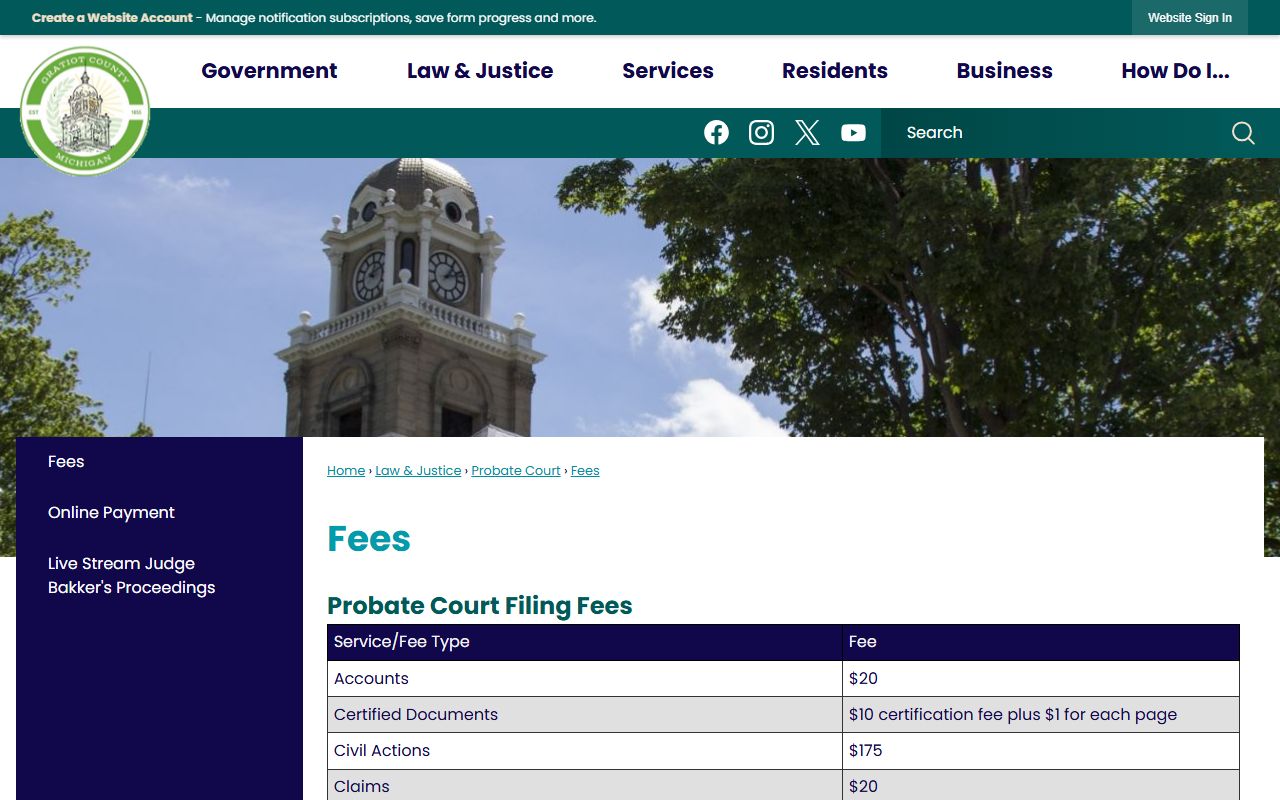
The table below gathers the posted probate fees so filers can plan before a trip to the counter.
| Item | Amount |
|---|---|
| Accounts | $20 |
| Certified documents | $10 plus $1 per page |
| Civil actions | $175 |
| Claims | $20 |
| Conservatorship petitions | $175 |
| Copy fee | $1 per page |
| Deceased estate | $175 |
| Guardianship for developmentally disabled individual | No fee |
| Guardianship petitions | $175 |
| Inventory fee | Contact the Probate Court office |
| Petition and Order for Assignment under $21,000 | $25 plus inventory fee |
The assignment option matters for small estates. When a Gratiot County estate is valued under $21,000, the Petition and Order for Assignment lets heirs settle it for a $25 fee plus the inventory fee, without a full deceased-estate case. The inventory fee is scaled to estate value, so the office quotes it directly.
What Gratiot County Probate Records Show
A probate file grows as an estate or protective case moves along. Early on it holds the petition and, for a testate estate, the will itself. As administration continues, the file gathers the inventory of assets, the accountings of money in and out, claims against the estate, and the orders the judge signs. By the end, it records how the estate was distributed and to whom.
Michigan gives the Probate Court a role in safekeeping wills even before death. The will-safekeeping statute at MCL 700.2515 lets a person deposit a will with the court for protection. The statute describes how a will is held and released.
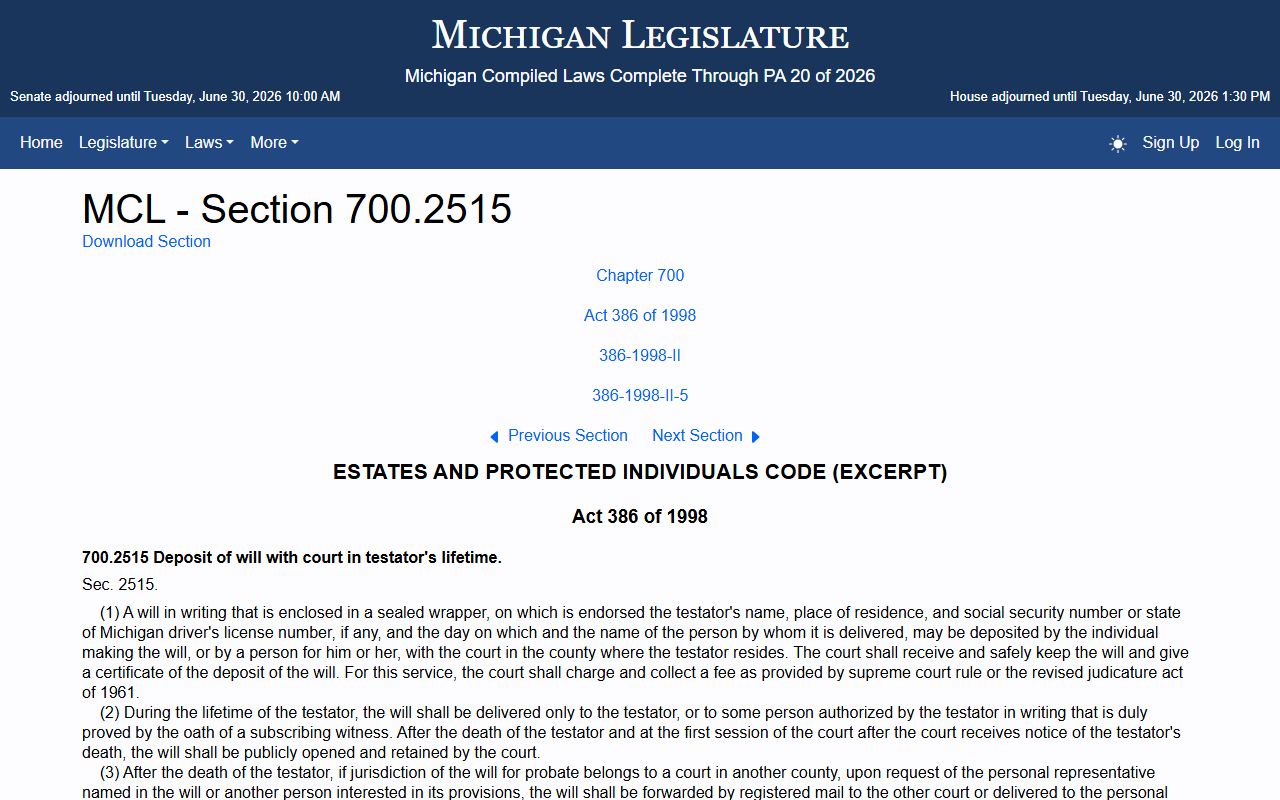
A deposited will stays sealed until the testator dies or asks for it back, which keeps its contents private during life. That safekeeping option connects a living person's planning to the estate file that opens later.
Estates can be handled formally or informally. Formal cases put more decisions in front of the judge. The formal-proceedings statute at MCL 700.3401 governs supervised administration and the hearings it requires. The statute frames how a formal Gratiot County estate is opened and run.
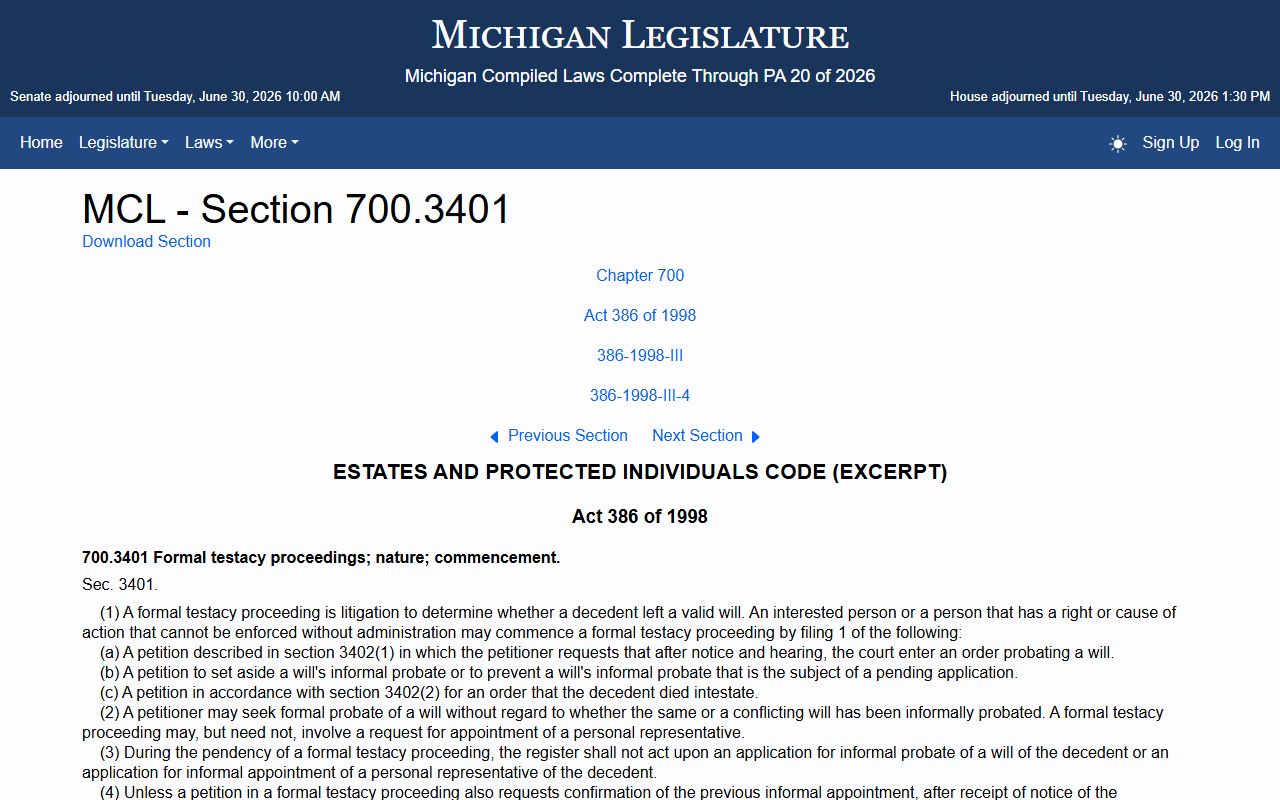
Formal administration produces a fuller paper trail, because the court reviews steps that informal cases handle without a hearing. Guardianship and conservatorship files follow a similar arc, with petitions, orders, and periodic reports on the ward's care and finances.
Restricted Gratiot County Probate Records
Not every part of a probate file is open. Michigan court records are generally public under the court-access rule, but some categories stay restricted. In Gratiot County probate cases, that often means minor-guardianship details, mental-health and treatment content, and sensitive identifiers.
Personal and medical information can be limited even when the case itself is viewable. Redacted identifiers such as Social Security numbers, bank data, and minor names are commonly hidden across county court files. Mental-health proceedings are restricted, especially where clinical or treatment details appear, and adoption records are confidential and sit outside routine public probate lookup.
When a file or a portion of it is sealed, ordinary counter access will not reach it. Note: A person seeking a restricted probate record may need a court order or a showing of a legal interest before staff can release it.